Grant Discovery with AI: Free Tools vs Grant-Native Approaches
The Challenge of Finding the Right Grants
For many cities and counties, grant discovery begins with a straightforward need: finding funding to support critical projects.
Local governments rely on grants to fund infrastructure, housing, transportation, climate initiatives, public safety, and community programs. Discovery is often the first step in that process, and for many teams, it is also the most time-consuming. Staff sort through databases, alerts, newsletters, and agency websites trying to identify opportunities that are worth pursuing.
As AI tools become more accessible, local government teams are increasingly experimenting with them to support grant discovery. How those tools are used has a significant impact on whether discovery produces momentum or additional workload.
How Local Governments Approach Grant Discovery Today
Most cities and counties rely on a combination of traditional methods to identify funding opportunities.
These commonly include grant databases, federal and state agency newsletters, professional listservs, and manual searches across agency websites. While these approaches surface a large number of opportunities, they often require substantial follow-up to determine eligibility, relevance, and feasibility.
Discovery tends to generate volume quickly. The harder part is deciding which opportunities are actually worth the time and coordination required to apply.
Using Free AI Tools for Grant Discovery
General-purpose AI tools are often layered onto existing discovery workflows to help teams move faster.
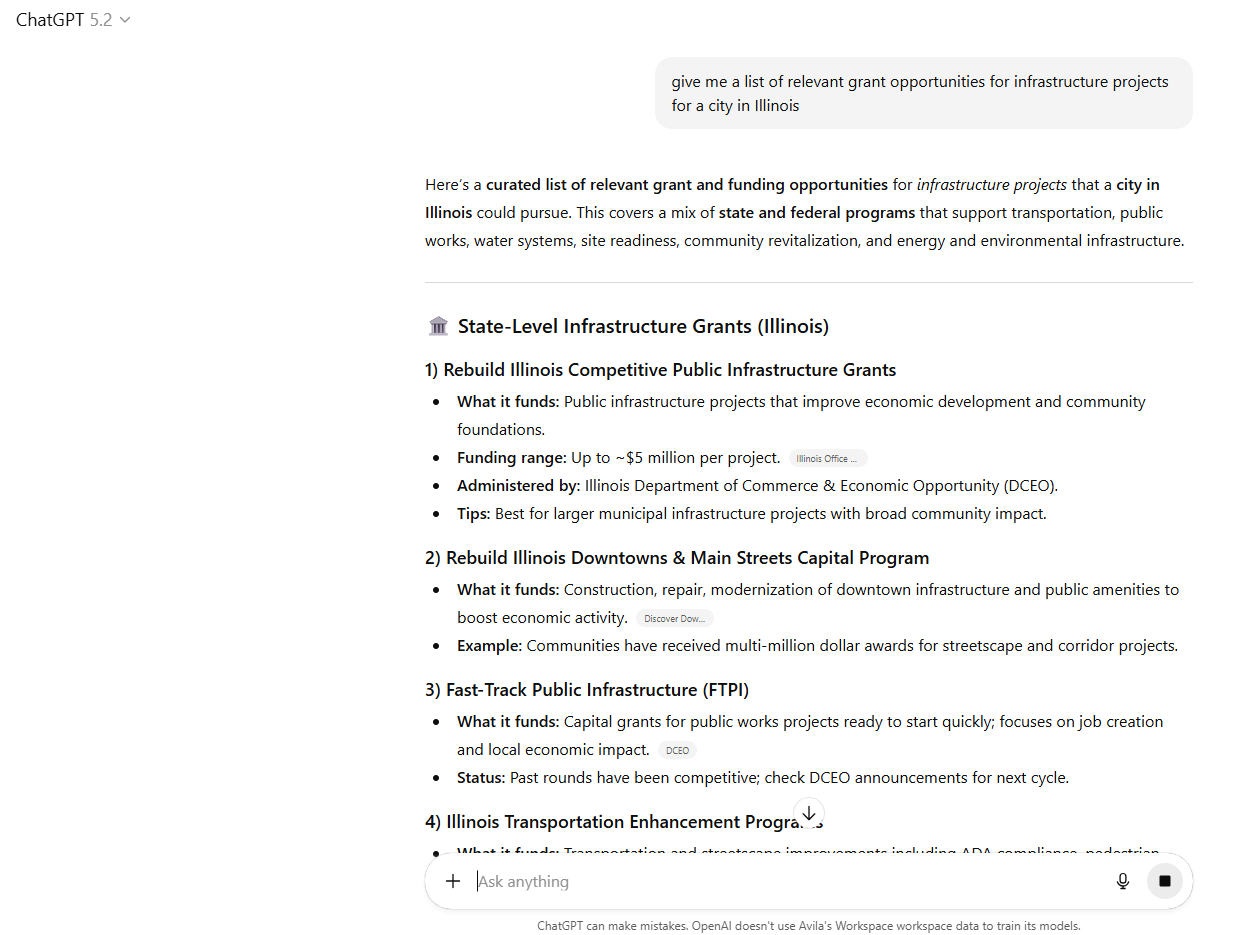
Cities and counties commonly use tools like ChatGPT or Perplexity to generate lists of relevant grant programs, brainstorm keywords for database searches, summarize long newsletters, or ask broad questions about which agencies fund certain project types. These tools are especially helpful for expanding awareness of available funding and reducing the time spent scanning raw information.
For teams with limited capacity, free AI tools can make discovery feel more manageable by accelerating early exploration.
Where Free Tools Help and Where They Fall Short
Free AI tools are effective at increasing speed and coverage during discovery. They help teams identify grant categories, understand program language, and surface opportunities that might otherwise be missed.
At the same time, these tools operate without jurisdiction-specific context. They do not know whether a city or county is eligible, how population thresholds apply, or whether an opportunity aligns with local priorities or capacity. As a result, discovery often becomes broader but noisier, requiring staff to manually evaluate each opportunity to determine fit.
Free tools help teams find more possibilities. They do not reduce the work required to decide which ones matter.
What Discovery Looks Like in a Grant-Native AI System
Grant-native AI approaches discovery as a filtering problem rather than a search problem.
Instead of starting with open-ended queries, discovery is grounded in jurisdiction type, population, priorities, and past funding history. Opportunities are evaluated against these factors before they reach staff review, reducing noise and improving relevance.
This approach shifts discovery from reactive searching to proactive matching.
How Avila Supports Grant Discovery
Avila's AI Grant Researcher is built specifically for cities and counties.
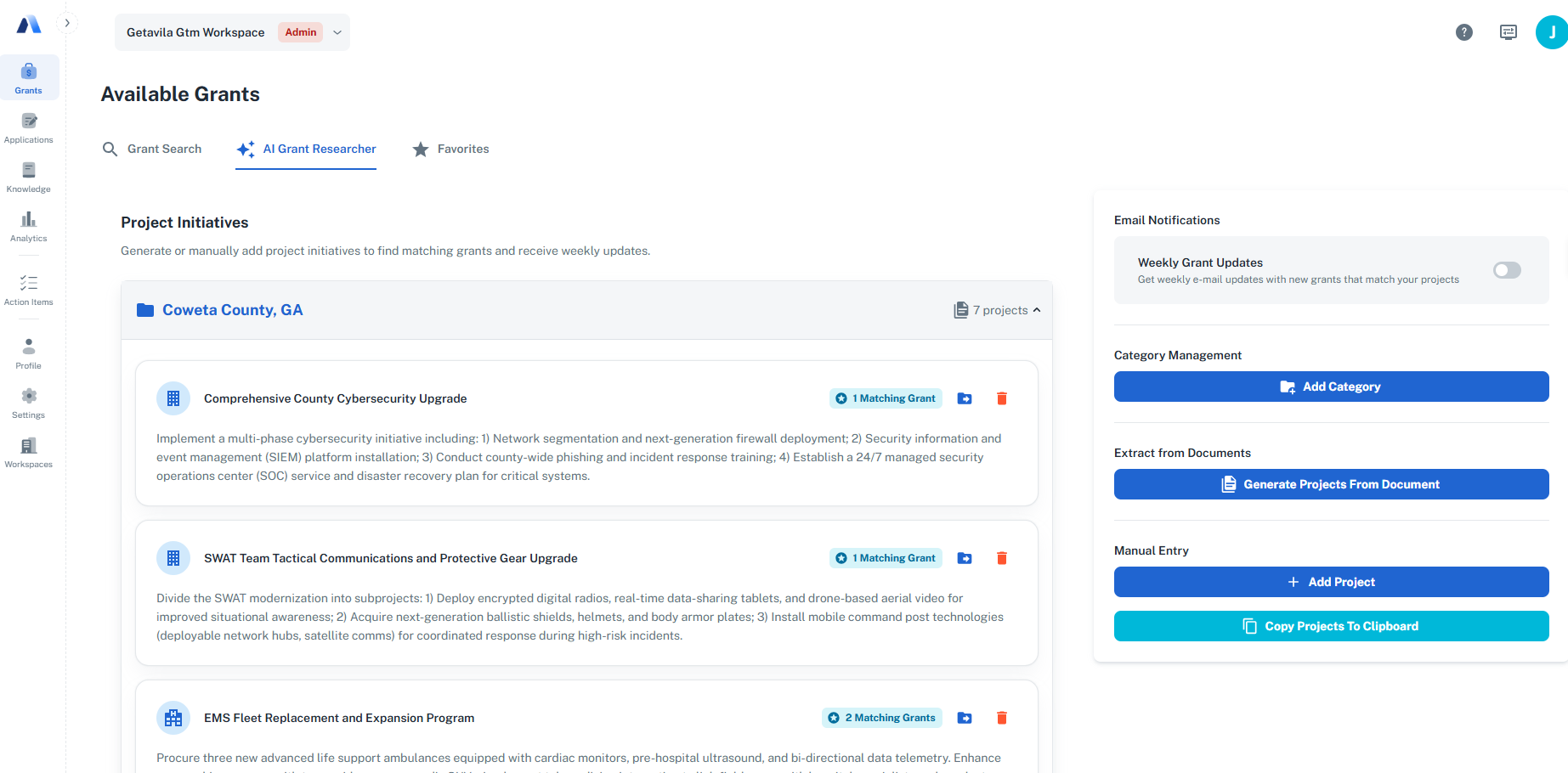
Rather than generating long lists of possible grants, Avila matches opportunities to jurisdiction characteristics and stated priorities. Ineligible or low-fit opportunities are filtered out early, while relevant grants are aligned to local plans and programs.
This allows teams to focus on opportunities they are realistically positioned to pursue, helping communities identify and compete for additional funding without increasing administrative burden.
From Discovery to Understanding Requirements
Once promising opportunities are identified, the focus shifts quickly from finding grants to understanding what is required to apply successfully.
That transition depends on interpreting complex funding notices accurately and efficiently. Long NOFOs often slow progress just as teams need to coordinate and move forward.
The next stage in the process is assessing eligibility so teams can confidently decide which opportunities to pursue before investing significant time.