Grant Eligibility with AI: Free Tools vs Grant-Native Systems
Is This Grant Actually a Fit for Our City or County?
For local governments, eligibility is the most important decision point in the grant process.
Before staff spend hours reading a NOFO, coordinating departments, or drafting an application, they need to answer a basic question: Is this grant actually a fit?
AI is increasingly being used to help answer the question of fit faster. But not all AI approaches handle eligibility in the same way.
How Local Governments Check Eligibility Today
Most cities and counties still rely on manual review to determine eligibility.
Typical workflows include:
- Skimming eligibility sections of NOFO PDFs
- Searching agency websites for clarifications
- Asking colleagues or consultants for interpretations
- Creating informal go or no-go notes in spreadsheets or documents
This process is time-consuming and error-prone, especially when eligibility rules depend on population size, jurisdiction type, geography, prior awards, or program-specific definitions.
AI tools are now being used to reduce that burden, with mixed results depending on the approach.
Using Free AI Tools to Assess Eligibility
General-purpose AI tools are often the first place grant teams turn when trying to understand eligibility quickly.
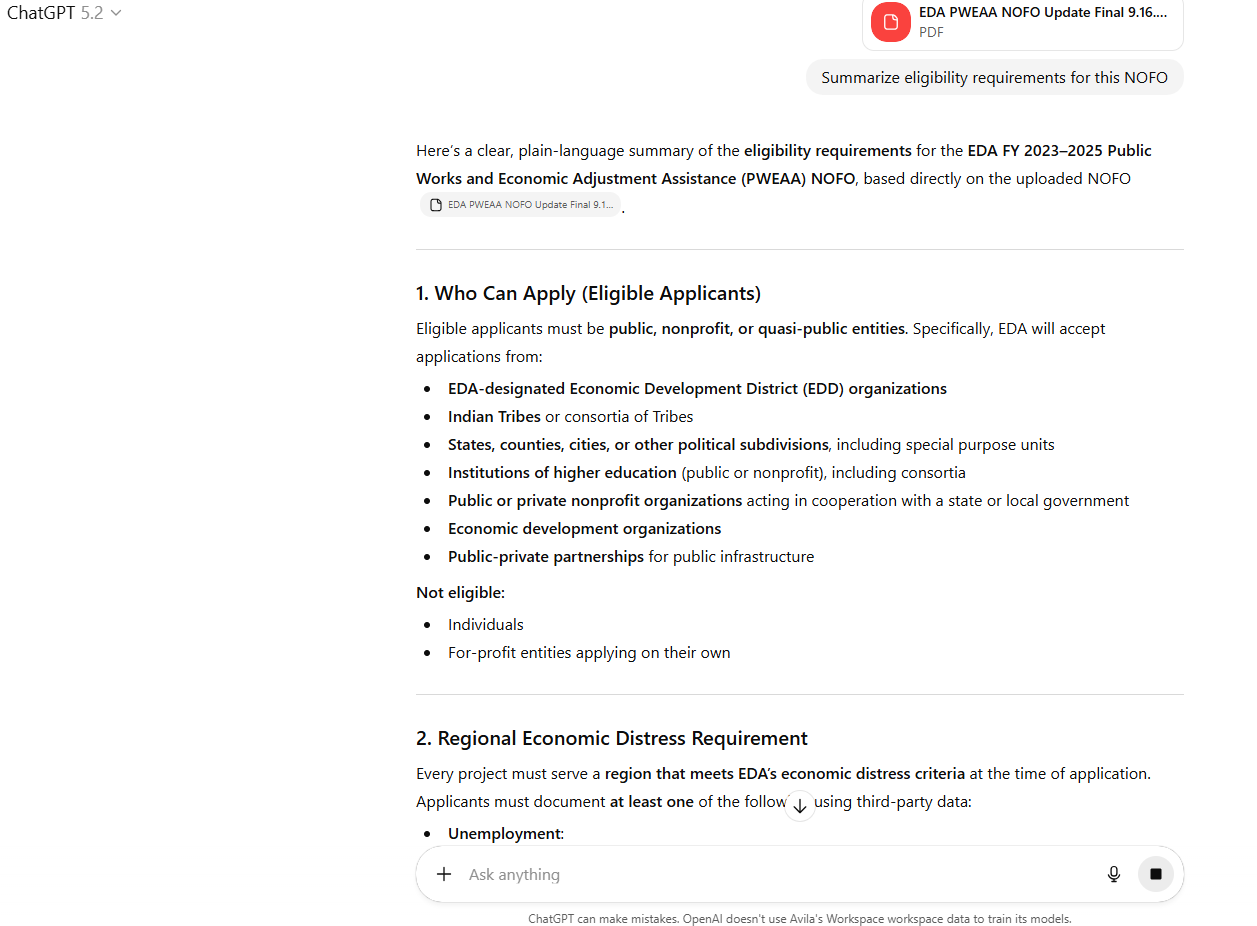
Cities and counties commonly use tools like ChatGPT to:
- Paste eligibility language and ask for a summary
- Ask questions like "Is a mid-sized city eligible for this program?"
- Clarify terms such as "local government," "unit of general local government," or "eligible applicant"
- Compare eligibility language across similar grants
These tools are helpful for interpreting text, especially when eligibility language is dense or inconsistent across agencies.
Where Free Tools Help and Where They Stop
Free AI tools can:
- Speed up first-pass understanding
- Translate legal or technical language into plain English
- Help staff ask better follow-up questions
What they cannot do is determine eligibility in context.
Free tools do not:
- Know your jurisdiction's population, governance structure, or service footprint
- Distinguish between similar applicant types such as city versus county versus special district
- Persist eligibility decisions across the rest of the workflow
As a result, teams still have to manually validate eligibility, track assumptions, and re-explain decisions later when the application moves forward.
Eligibility remains a judgment call, not a structured decision.
What Eligibility Looks Like in a Grant-Native AI System
Grant-native AI treats eligibility as a structured gate, not a one-off question.
Instead of asking "Can we apply?" after the fact, eligibility is assessed before teams invest time downstream.
How Grant-Native Eligibility Works
In a grant-native system:
- Jurisdiction details are known upfront, such as city versus county, population, and geography
- Eligibility rules are parsed directly from the funding source
- Opportunities are filtered before they reach the team
- Eligibility decisions are preserved and reused across the workflow
This changes the workflow fundamentally. Teams spend time only on grants they are actually positioned to pursue.
How Avila Approaches Eligibility
Eligibility is a core part of Avila's grant workflow, not a manual checkpoint.
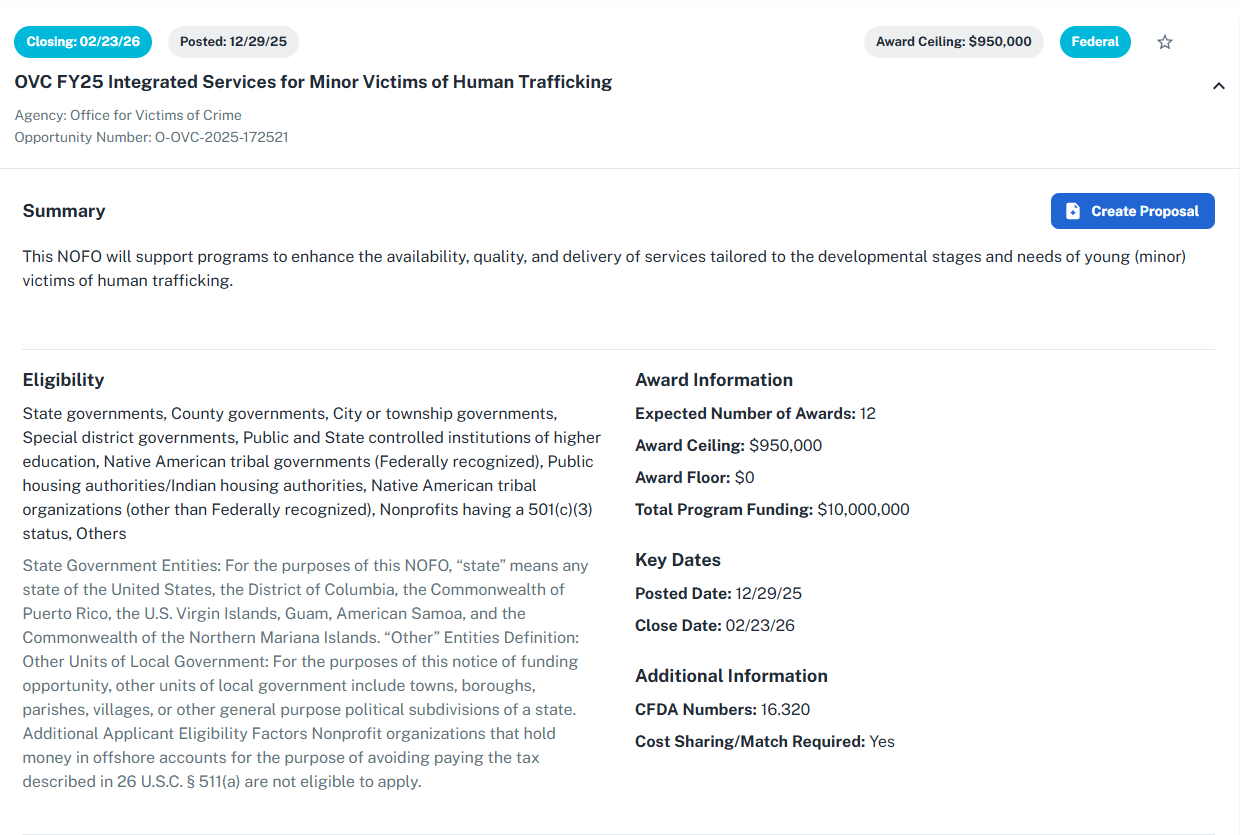
Avila's AI Grant Researcher:
- Matches funding opportunities to the specific characteristics of a city or county
- Accounts for jurisdiction type, population thresholds, and program intent
- Flags eligibility constraints early, before NOFO review begins
- Carries eligibility context forward into NOFO simplification, research, and drafting
Rather than asking staff to interpret eligibility repeatedly, Avila embeds eligibility into the system itself.
From Eligibility to Execution
Eligibility is only the first filter.
Once a city or county knows an opportunity is truly a fit, the work shifts quickly from deciding whether to apply to understanding what is required to apply well.
That transition is where many teams lose time. Long NOFOs, dense requirements, and unclear expectations slow momentum just as departments need to align and move forward.
The next step is turning eligibility into clarity. That means breaking complex NOFOs into structured, usable requirements that can guide research, drafting, and coordination without forcing teams to re-interpret the same document again and again.